
How Often Should You Get Your Dog Professionally Groomed?
If you've ever Googled "how often should I groom my dog," you've probably gotten a dozen different answers. The truth is, there's no single right answer. It depends on your dog's breed, coat type, and lifestyle. But there are some general guidelines that can help you build a grooming routine that keeps your pup healthy, comfortable, and looking their best.
Grooming isn't just about appearances either. Regular professional grooming plays a real role in your dog's overall health, from skin and coat condition to ear health, nail length, and early detection of lumps, parasites, or irritation that you might not notice at home.
Here's a breakdown by coat type, along with some of the breeds we commonly see here in Northern Virginia.
Grooming Frequency by Coat Type
Coat Type | Common Breeds | Recommended Frequency |
Short | Beagle, Dachshund | Every 8–12 weeks |
Double | Golden Retriever | Every 6–8 weeks |
Curly / Wavy | Poodle, Goldendoodle, Labradoodle | Every 4–6 weeks |
Smooth | French Bulldog | Every 8–12 weeks |
Wire / Long | Schnauzer, Cocker Spaniel | Every 6–8 weeks |
Short-Coated Breeds: Every 8–12 Weeks
Short-coated dogs like Beagles and Dachshunds are relatively low-maintenance when it comes to grooming, but that doesn't mean they can skip it entirely. Regular professional grooming helps remove dead hair and dander, keeps the skin clean, and gives a groomer the chance to check for anything out of the ordinary, like skin irritation, ear buildup, or overgrown nails.
Without regular grooming, short-coated breeds can develop a buildup of natural oils that leaves the coat looking dull and feeling greasy. Their nails also grow faster than most owners expect, and overgrown nails can affect the way your dog walks and put pressure on their joints over time.
For most short-coated breeds, a professional groom every 8 to 12 weeks is a solid routine.
Double-Coated Breeds: Every 6–8 Weeks
Golden Retrievers are one of the most beloved breeds in Northern Virginia and one of the most common ones we groom. Their thick double coat sheds year-round and picks up everything from mulch to mud on the trails. Without regular grooming, that coat can mat and trap moisture close to the skin, which leads to irritation and hot spots.
Double-coated breeds also experience heavy shedding in spring and fall. Professional grooming during these periods helps remove the dead undercoat before it has a chance to mat, which makes a significant difference in how manageable the coat is day-to-day.
For double-coated breeds, professional grooming every 6 to 8 weeks is ideal, with regular brushing at home in between appointments to prevent tangles from setting in.
Curly and Wavy-Coated Breeds: Every 4–6 Weeks
Poodles and Doodle mixes have hair that grows continuously rather than shedding, which means it mats quickly if left too long between grooms. These breeds need the most frequent professional attention, typically every 4 to 6 weeks, to keep their coat from becoming tangled and uncomfortable.
If you have a Goldendoodle, Labradoodle, or any Poodle mix, staying on a consistent grooming schedule isn't just about looks. Matting can become painful and, in severe cases, requires shaving down to the skin to resolve. What starts as a slightly overdue appointment can quickly turn into a full shave-down if the coat is left too long, which is distressing for the dog and frustrating for the owner.
Many of our clients with Doodle breeds opt for a 4 to 5 week schedule to keep the coat at a manageable length and avoid matting altogether.
Smooth-Coated Breeds: Every 8–12 Weeks
French Bulldogs and similar smooth-coated breeds don't need much coat maintenance, but they do need regular attention to their skin folds, ears, and nails. These areas can collect moisture and debris, creating the right conditions for yeast or bacterial infections if left unchecked.
Smooth-coated breeds also tend to have sensitive skin, so using the right shampoos and conditioners during a professional groom makes a real difference. A groomer will also check between the toe pads and clean the facial folds thoroughly, which are areas that are easy to miss at home.
A professional groom every 8 to 12 weeks keeps everything clean and gives a trained eye the chance to catch any skin fold irritation early before it becomes a vet visit.
Wire-Coated and Long-Coated Breeds: Every 6–8 Weeks
Breeds with wire or longer coats tend to tangle and collect debris more readily than short-coated breeds. Regular trims and professional grooming every 6 to 8 weeks keep their coat manageable and comfortable, especially during Northern Virginia's humid summers when matting can happen faster than you'd expect.
Long-coated breeds that skip grooming appointments often develop mats behind the ears and legs first, where friction is constant. Catching these early makes the groom much more comfortable for the dog.
What About Puppies?
If you have a new puppy, starting grooming early is one of the best things you can do for them. Puppies that are introduced to grooming at a young age, ideally before 16 weeks, are far more comfortable with the process as adults. Early grooming appointments are less about the haircut and more about getting your puppy used to being handled, the sound of clippers, and the sensation of a bath.
We recommend bringing puppies in for their first groom around 12 to 16 weeks, after their initial vaccinations are complete. Starting them on a regular schedule early sets them up for a lifetime of stress-free grooming.
Signs Your Dog Is Overdue for a Groom
Even with the best intentions, it's easy to let appointments slip. Here are a few signs your dog is ready for a groom:
Their coat looks dull, greasy, or feels rough to the touch
You can feel small tangles or mats when you run your fingers through their fur
Their nails are clicking on hard floors
Their ears smell or look dirty inside
They're scratching more than usual
Their eyes are being obscured by hair growth
Why Consistency Matters More Than You Think
One of the most common things we hear from new clients is that they waited too long between grooms and now their dog's coat is badly matted. Consistent grooming isn't just about aesthetics. It directly affects your dog's comfort and skin health. It also makes each groom easier and less stressful for your dog, since they're not dealing with extensive dematting work at every appointment.
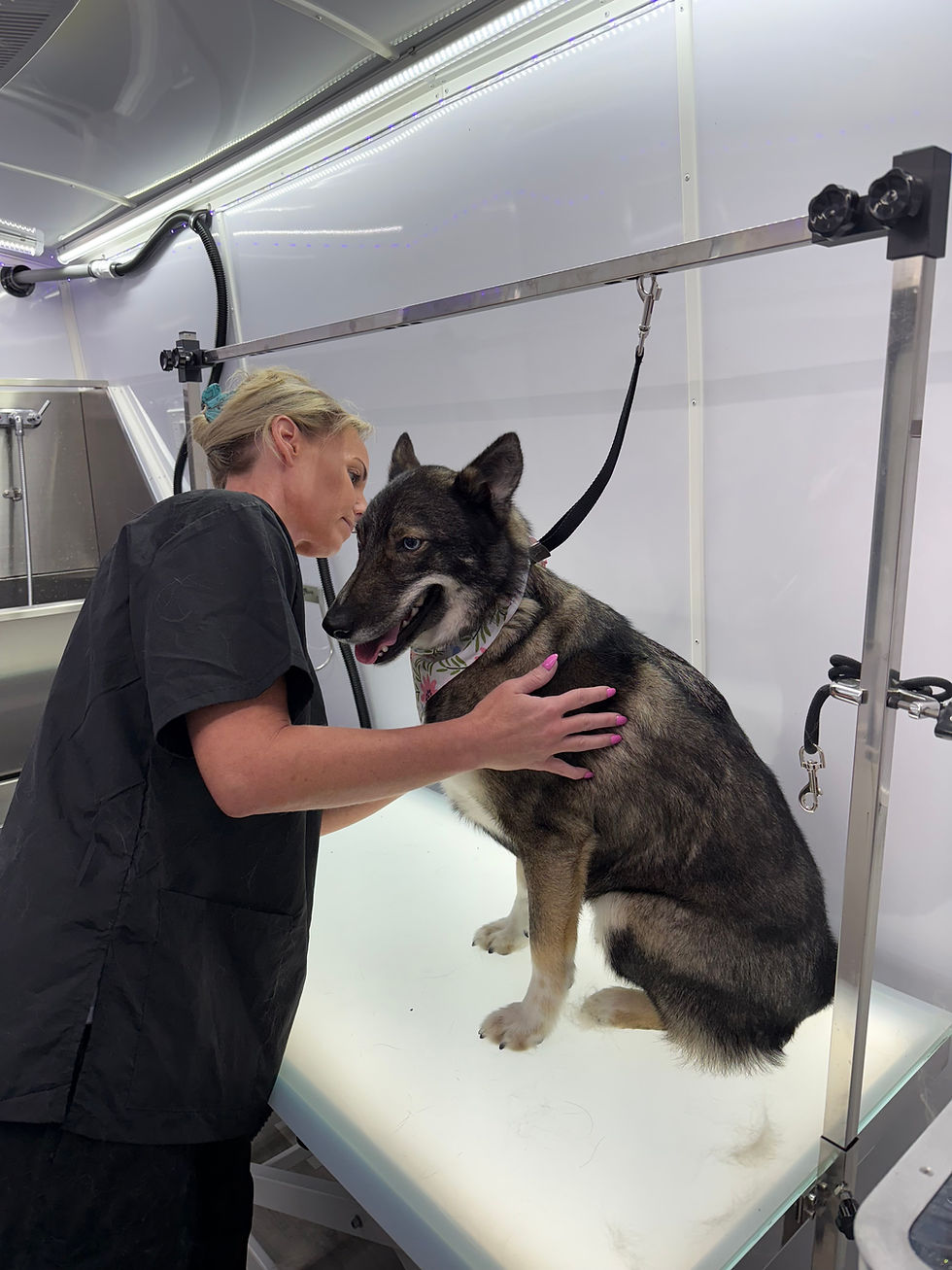
Dogs that are groomed on a regular schedule tend to be calmer during appointments, too. The process becomes familiar, and they know what to expect. For anxious dogs especially, the one-on-one environment of mobile grooming, with no other dogs, no kennel time, and no unfamiliar salon, makes a significant difference in how they handle each session.
If you're not sure what schedule makes sense for your specific dog, our groomers are happy to walk you through it at your first appointment. We serve dog owners across Ashburn, Reston, Herndon, Great Falls, McLean, Sterling, and throughout Northern Virginia.
Ready to Get on a Grooming Schedule?
Whether you're establishing a routine for a new puppy or getting back on track after a few missed appointments, we're here to help. Give us a call or fill out our contact form to book your first appointment, and we'll come to you.


Comments